Showing posts with label reading. Show all posts

Tuesday, September 06, 2011

Not Drowning but Reading

I think I forgot how to read.

I think I developed -- what to call it -- an affective dyslexia. I could make letters into words, words into sentences, sentences into narratives, narratives into worlds. I could be excited, moved, engaged by what I read. Even made to gasp by its audacity, wit, anger, beauty. But still: I think I forgot how to read. How to read as I did when I was a child. How to be taken over by reading.

The only childhood photograph of me that still exists (there was a bonfire mandated by vanity) shows me in the corner of a hotel lounge, my hair falling over my face, my face turned down into the pages of a book. Out of the frame, undoubtedly, my siblings and the other kids staying at the hotel are running around making mayhem. I'm the girl in the corner.

The girl in the book.

She grew up, and to all intents and purposes remained the girl in the book. I've predicated my working life on reading: as an academic, a critic, a bookseller and a writer. But as reading has become work, it has lost its edge. An edge, because the imperative of articulation has also whetted reading's keenness for me, has made it social and reciprocal and pliable and playable. But a private has been foregone, an inwardness of the reading experience. A writer/critic can no longer be the girl in the corner: I am answerable to an (indeterminate, possibly fictional) public. And that's the whetstone that keeps me sharp.

Reading-writing enabled the girl to grow up *in* the book, but also to use the skills learnt therein to affect life beyond the pages. Books are no longer my only safe space. 'Reading', as a complex and rewarding labour of awareness and articulation, has superseded 'reading' as an immersive line of flight. It keeps me present and engaged. If I want to lose myself, there's music (which I don't make, and rarely write about), contemporary dance and live performances of all kinds.

So maybe it's no surprise that it took a book in which rock and roll fuses religion, politics and scientific breakthroughs to re-immerse me, to shake my senses, to absorb me completely that I'm missing bus stops, tripping down bus stairs, gasping up from the pages as if hauled out of a dream or the sea. For 'a book' read 'books': nothing more satisfying than a series, Gwyneth Jones' Bold as Love five-parter.

But the point here isn't to analyse or articulate why. It's to state the rush that has returned. Adults are supposed to put away childish things, like reading when they should be working/socialising/engaging in adulthood. But there is something that feels undeniably mature, more adult, in reading with the rush: being open to immersion. What was a necessity as a child now requires a kind of courage, to drop the critical armature. To risk (after a fashion) addiction.

What's that? The thrill of transgression? Fuck no, boring. It's the thrill of permission. The moment when the world says yes! to something they told you was impossible, was forbidden: more of that, always more of that. Gwyneth Jones, Band of Gypsys
A sexually-charged science fiction/fantasy hybrid with radical leftist politics (but more concerned with administrative detail), a sprawling narrative structure, narrative voice that drops in and out of different characters in close third (sometimes in the same paragraph): something they told you was impossible, something that works by its continual increase, its refusal of closure.

Saturday, January 15, 2011

Holiday Reading, or Order vs. Chaos

…in which I continue with the questions asked in the previous post about the randomness/associatedness of any given stack of books. Given that no selection is entirely random (not least because I bought or borrowed all the books and so my taste is a major associative principle), but also that some associations are unpredictably weird (both Jenny Diski and Margaret Atwood cite Franz de Waal's study of brown capuchin monkeys and their cucumber/grape value system -- zeitgeist?) I am also curious about why some books satisfied and others irritated, particularly relating to ideas of order and chaos.

So, the books read were (in order, as far as I can remember):
Samuel Delany, The Einstein Intersection (thanks to Theo Chiotis for the recommendation)
Sylvia Townsend Warner, Summer Will Show
Neal Stephenson, Anathem
Jenny Diski, What I Don't Know About Animals
Doris Lessing, Shikasta
Ariel Dorfman, Other Septembers, Many Americas: Selected Provocations
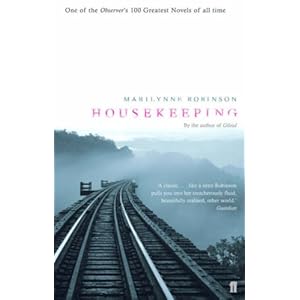
Marilynne Robinson, Housekeeping
Frances Presley, Lines of Sight
Giles Tremlett, Ghosts of Spain
Margaret Atwood, Payback
Patti Smith, Just Kids

One obvious connection/division arises instantly: science fiction and non-fiction. Pleasure/work? Or work/pleasure (or cucumber/grape, in the de Wall duality) (to risk echoing those irritating HSBC ads that accompany the journey into hell/the Ryanair boarding system). The books I was most excited to read were Anathem and Just Kids, having waited for all 1000 pages of the former to appear in paperback. I made a seemingly random decision (based on Ryanair's draconian cabin baggage policy and the capacity of my coat pockets) to begin my reading orgy with the relatively slim Delany -- and this may have been a strategic error. After Delany, most other SF seems laboured, laborious and portentous -- some would say that Stephenson and Lessing, both wordy authors with a love of didactic world-building, are prone to those faults even without comparison to Delany.

Einstein Intersection, from its euphonious title to its limpidly beautiful conclusion, might be a tenth of the size of Dhalgren, but is packed with similar ideas about travel, cyclicity, community, desire, curiosity, urbanity, and entropy. Its final lines are indicative of its ambiguous and generous nature: "As morning branded the sea, darkness fell away at the far side of the beach. I turned to follow it." I love that idea that turning towards the dawn is also following darkness.

Alas, none of Stephenson's atomic explosions could compare to that sunrise. Sylvia Townsend Warner's historical lesbian romance, set during the Paris Commune and told though the cycle of seasons and sunlight (as the title suggests), fared better in the inevitable comparison stakes: absorbing, witty, prickly, intelligent. It also shared with Delany's novel what's conventionally called an "open ending"; that is, that the final paragraph finds the protagonist setting out on a new adventure after failing to complete the quest that has taken up the course of the book. In each case, the protagonist spends the bulk of the novel striving for the love of a particular woman, and ends by losing that love to death. Lobey, Delany's Orphic protagonist, learns through an encounter with Le Dove (a Persephone figure) that he can change the myth, and journey rather than grieve -- an exciting conclusion that suggests change is possible.

Likewise in Summer Will Show. The majestic, infuriating Sophia Willoughby stays in the apartment of her dead lover, revolutionary Minna Lemuel (formerly her husband's mistress), rather than return to the living death of her Aunt Léocadie's patrician circle. She too starts on a journey, one that begins: 'A spectre is haunting Europe—the spectre of Communism.' Sophia ends the novel 'obdurately attentive and by degrees absorbed' by the Communist Manifesto. A highly dangerous text when Warner was writing in 1936, the Manifesto wrenches open not only the end of the novel but the very idea of the fictional narrative as having an ending -- and thus the relationship between writing "The End" on the final page of a novel, and the changeable nature of living history.

The Einstein Intersection was composed as Delany travelled around Mediterranean Europe, and shares with Summer Will Show a restless engagement, by rewriting, with European mythic history. Shikasta likewise grapples with myths, or rather with Myth, taking on Genesis and Exodus, explained as a Chinese Whispered account of the enlightened beings of Canopus colonising Earth (known in its latter days as Shikasta, the Broken). I initially pinned the novel as satirical, a dark comedy about the dangers and hypocrisies paternalistic imperialism, and I think that reading stands (why else write a novel that consists primarily of reports by alien/angelic functionaries, alternating in the latter stages with the diary of a character who is sacrificed to their 'higher' ends?) but there is a deadly (as in deadening) moral seriousness that accompanies it. The ending of the novel seems "open" -- in that it posits the rebuilding of Earth according to Canopean principles, and in that the book is the first of a sequence -- but in fact slams closed. The rebuilding of towns by a United Colours of Benetton assortment of well-intentioned characters is a nostalgic return to Edenic first principles bathed in the Canopean glow of SOWF, sense-of-we-feeling.

Anathem ends with a similar scene of communitarian rebuilding that is in fact a repetition of patterns sealed by a novel obsessed with geometry and things carved in stone; it doesn't mention Neolithic stone circles as Lessing does, but they appear in Frances Presley's Lines of Sight: not as Canopean symbols of cosmic alignment, but with their mystery intact. Stephenson, a mathematical whiz, loves a neat equation: whether algebraic, geometric or narrative, he likes his sums to come out right. For me, this makes his novels zero-sum games, which is after all the conventional structure: the story begins with order; chaos comes; order -- a slightly better, more thoughtful/wealthier/more pair-bonded order -- is restored, better protected against the coming of chaos. And they all live happily ever after.

In fact, Stephenson's novel is about the orderliness of order: it posits alien beings from other versions of our cosmos who (apart from a slight different in nostril shape) look just like us! How convenient, one might suggest, to erase in one stroke the metaphor of the alien as racial/sexual Other. These other humanoid beings have dyadic sex/gender, innate drives towards progress and violence, and (of course) Euclidean geometry. Orolo, the novel's expositionary character (in a novel that is 90% exposition, Orolo's use as the Basil stands out), leads the protagonist Erasmas in a "dialog" (the technical term given to Anathem's version of Socratic discourse) towards the realisation that this means that the bipedal, bilateral, heterosexual human form and attendant "human nature" are the closest to the ideal form (ie: Platonic) and therefore the best of all possible outcomes tended to across the polycosmi. This inclines Erasmas and the people of his version of the cosmos to welcome and collaborate with the incomers after scaring the bejayzus out of their leaders with a vision of the handily-named Everything Killers.

Sense-of-we-feeling, the notion that we are all the same under the skin, has been a valuable tool for peace-making and post-war reconstruction work, as well as for civil rights and human rights movements, and Lessing's impassioned denunciations of racism and sexism (as well as the amazing feat, at least in the edition I read, of featuring a character of colour on the cover of a science fiction novel -- something Ursula K. Le Guin has written about in relation to the continued whitewashing of Earthsea) are to be respected rather more than Stephenson's supposedly gender- and race- blind writing in which all the main active roles fall to white males. This is a problem with SOWF: that it inclines towards the sense that everyone is like us, where "us" means a dominant culture, handily allowing the representative figures of that culture to carry on carrying on, because they are now representative of everyone.


This is something that Jenny Diski and Giles Tremlett both touch on in their approaches to two very different dyads: human/animal and the two Spains (generally interpreted as Left and Right, but also expandable to nationalist/federalist-separatist; Christian/non-Christian; urban/rural; Barcelona/Madrid; men/women, and other variations that don't quite fall into line along left/right divisions). Diski is brilliantly insistent on the absolute Otherness of animals and the uneasiness that creates for humans as cultivators and companions (it also gives her an excuse to repeat the phrase "Derrida's pussy", which I found funny every time). She writes incisively about attempts to make animals like us (ie: to include them in SOWF), most wittily in her reading of LOLCat and the LOLCat Bible, which does a much more convincing job of revealing the strangeness of Genesis -- and the way that Genesis tries to harmonise the strangeness of existence -- than Lessing does in her systematic account of Canopean contact.

Rather than chaos, with its negative religious associations, maybe I should make the other term in my dyad strangeness. Although Housekeeping is, in its enchanting way, a hymn exactly to chaos: to the entropic, to letting go, to stepping outside order. The chaotic is a principle of strangeness, of the interruption of a system by something outside it, something with its own kind of order, like aunt Sylvie in Robinson's novel, who lets leaves blow into the house, but rinses and stores jars in the living room. Sylvie gives to Ruth, the young narrator, the gift not just of strangeness (difference) or chaos (interruption) but its refusal to conform to the system: a resistant Otherness. Ruth frequently uses the word "ordinary" for that quality she associates with her grandmother's house and the town of Fingerbone: a word that etymologically suggests the place of order in dominant ideals of human culture.

Much praised for its orderly, almost processional, use of language, the novel retains a formal strangeness (like Diski, it associates this strangeness -- and the chaotic tendency of human narrative -- with Genesis, rewriting the story of Eden and the Flood; Ruth and Sylvie, like Delany's Lobey, are destined to become errant wanderers, reversing the grand narrative of civilisation's "progress" from hunter/gatherer to settlement). Narrated by Ruth in the first person, it includes passages that offer impossible access to the thoughts and deeds of other characters (particularly her grandmother, long before her birth). While it appears to narrate the present through the convention of the past tense, suggesting that the narrative voice is close in time to -- possibly even coincident with -- the events described, the end of the novel suggests that it is very much a distant reflection from years later, a different kind of open-endness in its temporal reversal that is as dizzying and lovely as the repeated image chain that associates, inverts and reconfigures drowning in flying, and flying in drowning. The image chain does not draw to an orderly conclusion, but keeps generating, pushing at the strangeness of human movement through the elements. Like Ruth and Sylvie, Robinson's prose opts for a resistant Otherness.

Patti Smith is insistent on the significance of this quality for her gallery of artist-heroes in Just Kids (Rimbaud, Blake, Kahlo, Hendrix): not in the sense that artists are Other than human, but that they are compelled by the dense, irresolvable mystery of what is not-I/us; not compelled to resolve or normalise it, but to enter into it. This doesn't preclude them from some of things associated with SOWF (kindness to others, generosity, material beauty, community), but it does mean they are uneasy about the homogeneity, passivity and -- for want of a more precise term -- niceness that SOWF implies in Lessing's and Stephenson's "let's all pitch in together" heartwarming big finales. Warner's Paris Commune is a less harmonious but more exciting vision of divergent personalities, aims and discourses united not by SOWF but by a healthy respect and curiosity about the difference of difference (the very difference that motivates the curiosity of Delany's Lobey). Smith draws a distinction between the 'incestuous community' of the St. Mark's Poetry Project and the mutuality of her connection with Robert Mapplethorpe: 'I understood that in this small space of time we had mutually surrendered our loneliness and replaced it with trust.' Trust is one name for what occurs between Diski and her cat, a surrendering of loneliness that is not a merging of discrete entities, but an echoic resonance replete with caution, tentativeness, contingency and commitment. Trust is open-ended, whether between living entities or text and reader.

Wednesday, October 21, 2009

Alison Croggon, Theatre

This is a classic DL strategy: a re-reading prompted by a fresh encounter. I heard Alison read last week in London at the Poetry Society and was overwhelmed by both the familiarity and utter strangeness of her poetry. I've known Alison for ten (Ancient Mariner moment... OK, it's over) years, across oceans and ether and pages and conversations. The question of "knowing" a person in their work as/because you know them in real life is for another post, though: what struck me in the sunny Studio was the way that I *felt* her work.

I remember seeing Alison read at Pembroke in February 2000, when she was the Australia Council fellow at Cambridge: she wore a leopard-print dress and high-heeled black sandals and surveyed a crowd (myself included) of ratty/dumpy/boho students and faculty dressed as much for the soul-creeping dread of the late winter fens as for the cold. But, as we came to realise, Alison's strategy against the soul-cold was to burn brighter, to be fiercer -- and in her fierceness was a lack of critical distance (irony, intellectualism, equivocation, revocation, self-denial, incomprehensible density as cover for deep feeling) that marks a lot of contemporary experimental poetry. Her reading was full of voices, like Prospero's isle, but also blushingly full of bodies, with a directness and cutting-to-the-quick that is poetry's essence -- and which I think is neglected.

Writing about apostrophe (poems that address a listener within the text via the exclamation O! or the use of the second person), critic Jonathan Culler describes it as symptomatic of "all that is most radical, embarrassing, pretentious, and mystificatory" about poetry. I love that strange combination of words (and they definitely came to mind while I was watching Jane Campion's new film Bright Star today). Poetry *is* embarrassing, not just naked but skinless, not just skinless but the act of pointing and saying: "Look, no skin! Look, blood -- meat -- pulse!" It's in that radical strategy of drawing attention to that which we do not look regard that Alison's poetry excels. "I am concerned," remarks the titular garment in "What the Glove Said," "with the skin of nearness."

The glove's exactly the object (intimate, inside-out, human-shaped) to speak metonymically for the poet. As the title of her most recent collection Theatre suggests, she brings a playwright's (and theatre critic's) eye to the drama of revelation and the honing of address. The book begins with a plangent and seemingly transparent poem about her inability to write the poem that she writes, which sets the stage for the fiercely doubting, elusive yet ever-present "I" that will declare and undercut itself throughout the book. Of the self's relation to poetry, and the writer's relation to the reader, the poem "Theatre" asks
and is this really my own damage
or a wound torn in others
that they must diagnose
through my skin?
There's no deflection here, no deferral of meaning. It's reminiscent of John Berger's Pages of the Wound, and some of the prose poems in the collection have the dense, earned slippage between allegory and political reality of Berger's novels.

Even so, the "I" struggles to come to terms with its incarnation, its necessity for the production of poetry. In "Flames," the speaker extinguishes the poem with the lines
I am ash for a beloved voice
whose irony rebukes me
, while the poem "after Arseny Tarkovsky" (which is a version or ventriloquism of the Arseny Tarkovsky poem used by his son Andrey in the film Stalker) ends with an accounting that cannot add up: "My life… My love… my soul… my thoughts… but it isn't enough." Even when the act of writing appears to offer sufficiency and expression, it's not enough:
She writes her body with the tips of her fingers but it is no longer her body. The words are not her they belong to nobody. She writes to slough off her name. She speaks to become invisible. She desires to become what she is.
No wonder Alison's first collection for Salt was called Attempts at Being.

Monday, October 12, 2009

Paranoia in Translation, or Lisbeth Salander in the Land of Green Plums

Actually, this post could equally be called Schizophrenia in Translation: the sensation that derives from reading two (very different) books concurrently to the point that they seem, if not to merge, then to be deeply intertwined (litzophrenia?). Not that I'm looking to make light of mental illness by using terms like paranoia and schizophrenia out of context, but sometimes an encounter with a book will remind me what a weird process reading actually is -- that sitting silently over some marks on woodpulp, muttering and laughing to oneself while entering into a fantastical world and often into the persona of an invented person, is a pretty wacky thing to do.

It's hard to stand outside reading as an activity: I've been doing it since literally before I can remember anything else. One of my first and only toddler memories is of putting together the blobs on a flashcard into a word. Après ça, there was no stopping me: by the time I was in infant school, I was teaching the other kids to read. I think my mindbrain has probably been so shaped by reading that it's what I am in the same way that Usain Bolt's musculature and neurons have been sculpted by running. Culturally, reading has pretty much set in for the long haul. We all (84% of UK 16-65 year olds in the UK have literacy at GCSE grade G or above) do it inadvertently from the cereal box to the end credits every day, and many of us do it advertently (a word? And if not, why not?) most days as well.

Maybe it's because I've been hitting the poetry like a poetaholic (with events at PoetryFilm and at Keats House for Brittle Star, and reviews due to Staple) that I contracted reading-dissociation when I switched back to novels -- and a big fat novel at that, purchased especially for a weekend of train journeys and a solo hotel stay. I'm hardly the first person to be bowled over by Stieg Larsson's The Girl with the Dragon Tattoo (an established fact, since half the people at PEN have been telling me to read it for at least a year), but I might be one of the least likely. After (because of? despite?) a brief (and disturbing) devotion to the work of Andrew Vacchs when I was about sixteen, and an obsessive interest in Twin Peaks and The X Files, I have never been much for thrillers, either in codex or on celluloid.

Both my parents were big with the mysteries, 'tec series and all things investigative, but my love of noir begins and mostly ends with Laura (a major influence on Twin Peaks). That's right: I don't have the hots for Hitchcock, and I've no remorse for yawning at Morse. It's a failing, I think, as a reader, to exclude a genre from your library, but Delirium's mystery/thriller shelf is entirely reserved for the splendid Sherlock Holmes, a detective I encountered almost as early as I began reading (those shadowy semi-memories of The Hound of the Baskervilles starring Basil Rathbone as Holmes still give me nightmares). I've tried Rebus and Whimsy and Wallander and Dirk Gently, and no-one has ever come close to the idiosyncracy and intellect, the conviction and addiction, of Holmes (especially Jeremy Brett in the role).

But I have to confess: Lisbeth Salander, the eponymous "girl with the dragon tattoo" comes close. Despite Larsson's info-dumping, despite the financial shenanigans that make as much sense to me as Ikea self-assembly diagrams, even despite the relentless snö (and equally persistent mosquitös) that falls on all Scandi detectives, I found myself hooked until 3 am, reading with the covers drawn up to my chin -- except when I leapt out of bed to check the door was locked. I couldn't sleep until I finished the book, and then I couldn't sleep some more. If my bag hadn't been full with a print-out of my own novel (which I'd promised myself I'd edit on the train home, come hell or inconveniently located rabbis), I would have bought The Girl Who Played With Fire in WH Smith's in Manchester Piccadilly station that very morning (possibly even before breakfast at the excellent Koffee Pot).

Because here's the thing: I don't read thrillers because they *get* me. Rewatching The X Files (series 1-3 1/2) recently, I found myself almost choking on my fingernails even in episodes that I'd seen half-a-dozen times before. I suffer from what's known in my household as "narrative tension." Hell, I couldn't even watch Sense and Sensibility at the cinema without getting fahrklempt about whether Marianne would see that Alan Rickman, I mean Colonel Brandon, was infinitely superior to stupid-haired Willoughby. And I'd read the book only six months previously (I also clearly have an appallingly lax narrative memory). I'm like the goldfish in Ani Difranco's song for whom the little plastic castle / is a surprise every time. Or a terrifying shock.

It's not so much about guessing whodunit as worrying in every fibre of my being about who's going to be next and what horrible defilement will be described. Worrying, I suppose, that I'll be next. Larsson's thrillers fit very much in grim miserablist realism tradition of writers like Ian Rankin where a city like this harbours people like you living next door to psychos like him. Not so much plausible deniability as undeniable plausibility. Larsson's obsession with Ikea furniture may be a running footnote on the commercialisation of Scandi design, but it's also an arrow pointing at our own living rooms (and particularly at the Swedish airport minimalism of the hotel room where I was holed up). What with financial crashes, banker bonuses and inter-generational sexual abuse, Dragon Tattoo felt like reportage as much as fiction -- and who doesn't feel tense thinking about how the house of cards (economic, political, environmental) is about to crash down on us?

Despite the expertly-generated tension, the novel lacked two aspects that mar most thrillers for me: punitive manipulation of reader expectations (and of vulnerable female characters), and stupidity dressed up as fearlessness (goading the reader to follow the investigative character into the darkness). It also lacked any sympathy for, or glamorisation of, the killer(s), and in a way any curiosity about them. They were dead space, plausibly drawn characters exerting zero narrative fascination rather than the devilish figure who haunts so many contemporary thrillers. Coupled to that lack of interest is an abiding, energising fascination with -- and fury about -- the systems of fear that make possible sexual abuse and murder, and the silence surrounding them. Industry, politics, the law, the family, the state: these are the real abusers in Larsson's books, the facilitators who empower the bit-part players who carry out the social will, whom Salander fights against with every sinewy ounce of her 4"11 being (Kate Mosse made the point well in a Guardian review entitled (although it's lost its title online) The Man Who Liked Women). I've never encountered a mainstream fictional work that lays out as clearly the effects of state power, in particular its impact on those considered less than full agents of the state: women, children, those with (perceived or actual) disabilities, those who dissent.

OK, Larsson was no Herta Müller and contemporary Sweden is not Communist Romania, but I can't help feeling that their books have something in common -- and not just because I've been reading The Land of Green Plums this weekend as well (props to Haringey Libraries, incidentally, for having a copy of the Nobel prize-winner's book, which is incidentally out of print). It's a book so powerful that I had to return it to the library the minute I finished reading it: not just because I wanted other people to have the chance to read it, but because it felt dangerous to be carrying it, as if it were one of the banned books that the characters hide in the summer house. Or even as if it might infect me with the green plum-death or cancerous nut or the dream of the sack that variously afflict characters. It's an extremely calm nightmare of a book, where the narrative tension happens on a word-by-word level, as if the novel is in code. There's no secret who the bad guy is (the state and its agents) even as the protagonist investigates every detail of her life exhaustively to find it/him out, but almost any character could be a spy, even Elsa the white cat, creating an extraordinary atmosphere of anxiety, as in the novels of Ismail Kadare (although unlike Kadare, Müller does not see women's genitalia as both the salvation and betrayal of every man).

In both books (both of which are, of course, in translation, by Reg Keeland and Michael Hofmann repectively), the tense mood of the thriller and the anxiety of the reader act as political critiques, engendering the desire for relief through change. In both, the female protagonist is almost unbearably unknowable, courageously unpredictable, and hyper-alert to the tentacular enemy with which she battles. Or maybe I'm just hyper-alert to their similarities after my weekend of sleepless paranoia, and hyper-alert too to the possibilities of thrillers to challenge my thinking, and experimental novels to have me on the edge of my seat.

Wednesday, June 13, 2007

Bureau of Film Incompetence?

Cary Bazalgette's letter in today's Guardian is the latest strike against the British Film Institute's mishandling of its role. As Cary points out, control of the BFI has been given to the Film Council, a commercial body whose total contribution to the canon of British cinema is Sex Lives of the Potato Men. The full woe of the story is documented - of course - on a blog, bfiwatch, run by Pam Cook, a BFI and Screen author.

Here's my take, unsanctioned by senior academics, just based on interactions with various high-ups in the BFI over the last year, and also on conversations with library staff. In the tradition of corporate takeovers, the Film Council is now severing the BFI into edible chunks under the cover of convergence and flagship-ness. Squillions of pounds were poured (literally, the place is made of very expensive concrete) into the ugly echo chamber of the BFI Southbank's new "wing" (think 1970s brutalist institution rather than beautiful bird), while the library struggles to fund new acquisitions and, er, pay staff.

While many researchers gently mock the BFI Library - until last year, the catalogue was entirely DOS-based and required an advanced degree in information science to find anything; there's no internet available, wireless or otherwise; the microfiche machines print ghost copy - they do so with great fondness and, more than that, a long, democratic history of use. Because the library is public, all you need to work there is a library membership (roughly a tenth of the cost of a London Library membership) and a pen (yes, a library that allows pens!) There are open shelves for browsing current and reference material, as well as a treasure trove of publicity material, deposited screenplays, audiotapes and videos. You may find yourself working alongside well-known film scholars such as Laura Mulvey or film journalists or producers or costume designers or students. All sorts of names pass over the screen that lets you know your books have arrived from the basement.

Most important of all, the staff know the collection brilliantly -- able to judge whether it's worth searching for that obscure Polish film magazine, and equally able to advise on how to find what you don't even know you're looking for. Currently, there are too few staff working too few hours, because of pay cuts siphoning off money to the empty concrete box on the other side of the river. While it's undeniably exciting that the new Mediatheque is (selectively) making material from the National Film and Television Archives available to viewers on site and on tour around the country, it just points up further the way in which the Library and Publishing divisions are being regarded as poor relations. It just reinforces a comment made to me by a student in a first-year film studies course:

"What do you mean there's a reading package? This is a film course!"

Thursday, November 09, 2006

Waving or Drowning?

I've now been reading Virginia Woolf's The Waves for a month. It's less than 200 pages long, gorramit, but I just can't seem to finish it. It's actually a great book for public transit reading -- absorbing yet non-linear enough to roll with the punches (yup, actual punches sometimes, along with sophisticated elbow blocks and shoulder barges). I have read it before, back in the distant mists of my adolescent Virginia Woolf obsession (inspired by Sally Potter's Orlando) but the impetus to re-read came from the incipient multimedia stage production by Katie Mitchell at the National Theatre. I've wanted to re-read it for a while, since doing some work on how Virginia Woolf haunts contemporary films about women academics -- Charlotte Rampling gives a scintillating reading from The Waves in Sous le sable, very much a film about waving and drowning.

So -- will I finish the book before the show tonight? Or is it a book that - with its cyclical nature - can never truly be finished without beginning it again?

Tuesday, November 07, 2006

Get Some Chicken

Here I was, planning to be soooooo good and make some headway into the stacks of Delirium's Library (although Marina Warner's Phantasmagoria is so mind-blowing it's like a delirious library in and of itself)... and then: boom! New Marjane Satrapi leaps off the shelf and into my hands at Mega City in Camden. See, I keep trying to be serious and read about 'the role of the archive in contemporary artist's film and video' and an article on Jean-Luc Godard by someone called Frodon (no joke!). But. Comix get in the way.

Chicken and Plums! Chicken and Plums!

K, I'm gonna go read it now. Tomorrow I will be serious and get stuck in.